
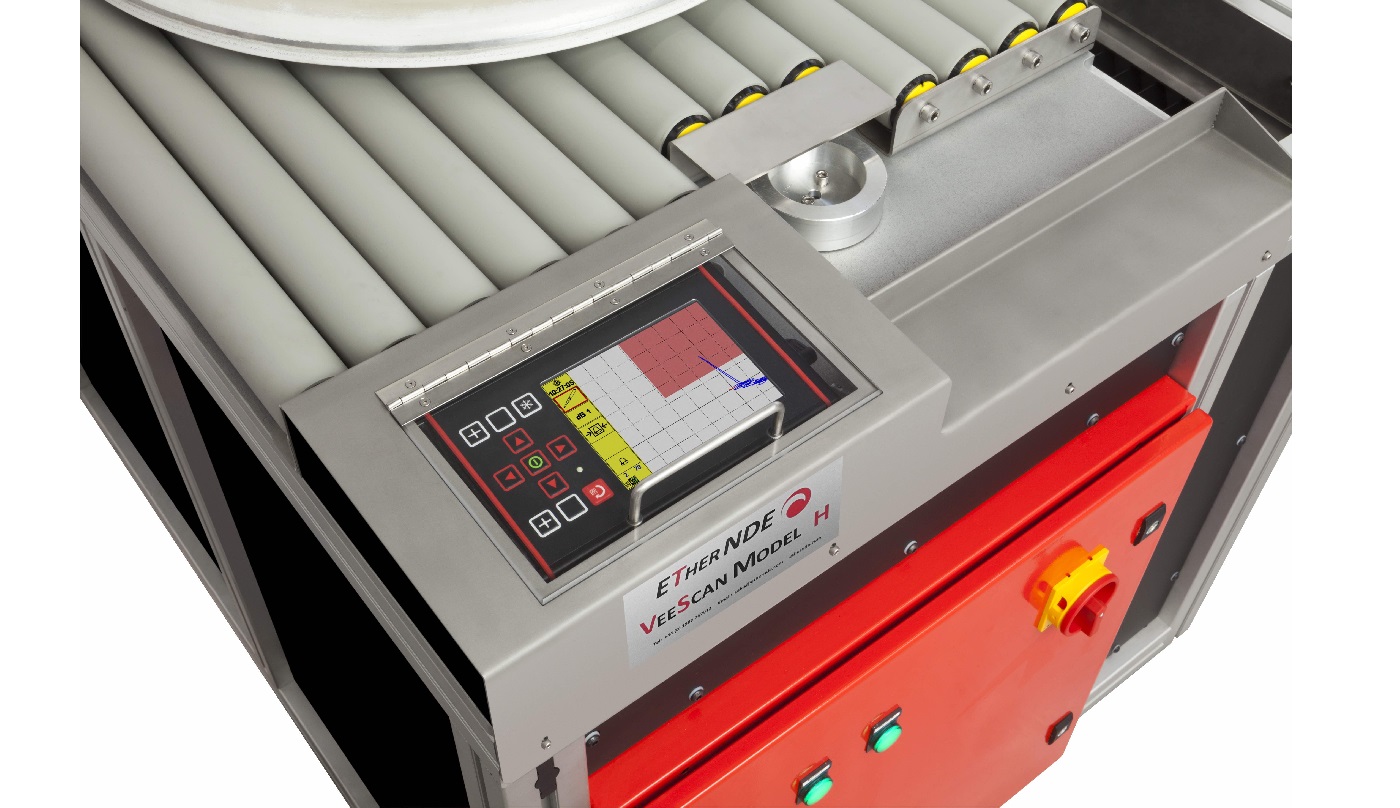
VeeScan Eddy Current Wheel Inspection
Sale ✓ Rental ✘
The VEESCAN is ETher's first Wheel Inspection System and offers maximum flexibility. The VEESCAN has a proven mechanical design and established record of breakdown-free operation for 365 days or more. Appealing to many companies in the Aerospace industry, the VEESCAN is ideal in all aircraft wheel-testing environments.
The VEESCAN is able to be configured with a wide choice of probes and allows any wheel testing facility the flexibility to select the system most compatible with their workload. Teamed with a full choice of operation modes, the VEESCAN maximises the probability of detection.
The VEESCAN is offered with the ETher NDE guarantee of complete client satisfaction and excellent technical support.
- User friendly, easy initial setup with “Teach & Learn” and “Save & Recall”
- Versatile - can test wheels from Helicopter Nose to A380 Main Wheels
- Flexible - Scans whole wheels in either direction
- Simple PDF reporting: that can be printed, stored, viewed locally or over a network
- Manufactured from heavy-duty aluminium extrusions with easy servicing using standard, readily available, branded control automation products such as Schneider Electric.
Leading Eddy Current Technology
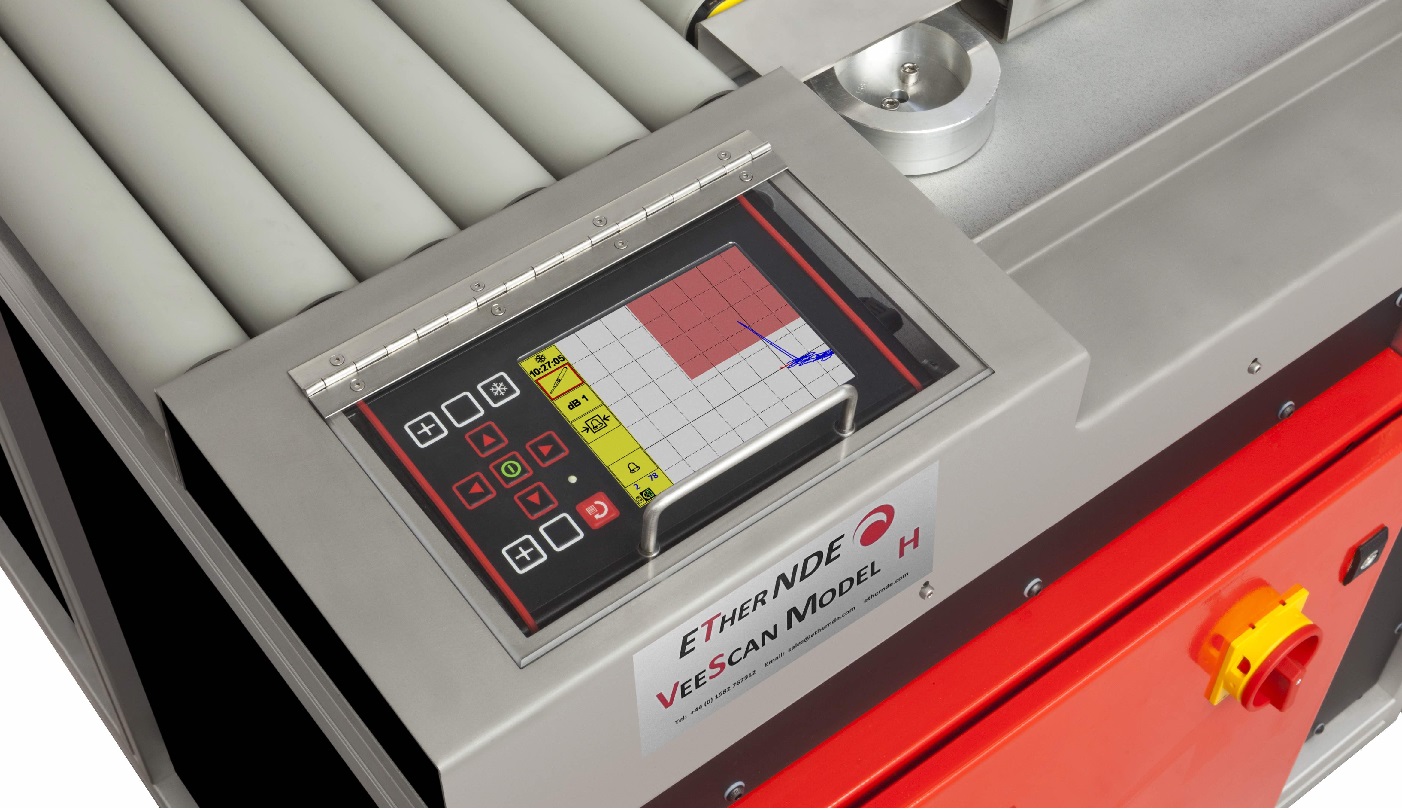
The VeeScan works in conjunction with the AeroCheck+
which sits behind a protective tough polycarbonate
window and provides the unit with the eddy current
technology for the inspection and is used to program the
wheel-scanning probe. With the ability to pre-program
the probe the operator can guarantee the correct set up
is being used for the current inspection job.
The simplicity of having the AeroCheck+ in its own
housing on the front of the machine also means that it
is readily available to be used as a stand-alone unit for
manual inspection if needed.
The unit transmits the eddy current signals to the
VeeScan Control Panel PC offering stable eddy current
performance, high resolution and the flexibility that the
AeroCheck+ is known for.
Wheel Inspection Sequence
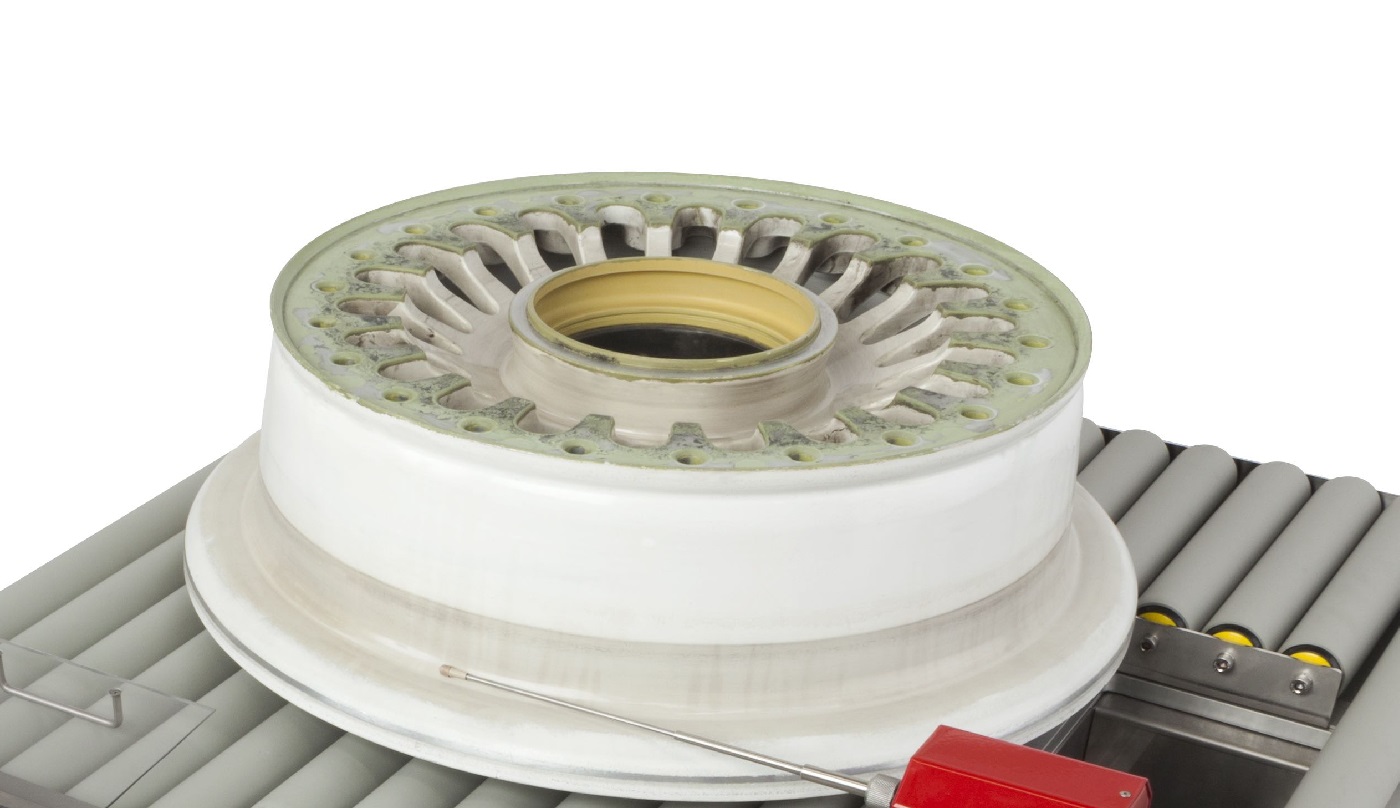
The VeeScan is designed to lift the wheel and fix it with an
automatic adaptor that uses the wheel inertia to center it.
It offers an integrated roller tray for easy manoeuvrability
and integration into a conveyor system. The VeeScan
also features an automatic hub size adaptor and can test
wheels up to 900mm (35”) diameter.
A circular absolute probe is positioned perpendicular to
the surface to ensure uniform sensitivity regardless of
wheel surface profile as the probe progresses through
the wheel bead seat area. Recommended frequency is
200kHz.
Customer Benefits
- Flexibility: Due to the two axis bi-direction ability, the wheel orientation and direction of scanning can be changed. Traditionally on an automated wheel inspection machine the wheel is inspected rim down and inwards from the rim edge to the barrel. The key advantage is both halves of a wheel can be inspected at the same time (providing the overall height is 380mm (15”) or less).
- Ease-of-Service: The machine is built from readily available automation components from companies such as Schneider. The on-board software features comprehensive diagnostic and condition reporting for rapid on-site repair. Additonally the VeeScan may be connected via the Internet for remote analysis by our engineers.
- Intuitive set-up: A “teach and learn” system allows the machine to be trained to inspect a wheel. ,Maual fine tuning of values means an accurate setup can be saved for the same wheels in the future.
- Versatility: Designed to test the widest range of aircraft wheels from Helicopter Nose wheels to A380 main wheels.
- Speed & Reliability: Automated inspection allows the wheel to be inspected much more quickly than for a manual inspection, while still ensuring the required area of inspection is 100% scanned.
- Reporting: The fully digital reporting system archives the data for analysis and review, either on the VeeScan itself or remotely over a network. A simple one-page report may be saved and printed.
- Safety: There is an option for a separate control stand with dual push button activation start means the operator is not near the rotating wheel during the test. Additionally, the VeeScan uses a wheel-clamping system that has been field proven over extended periods of time to further ensure safety.